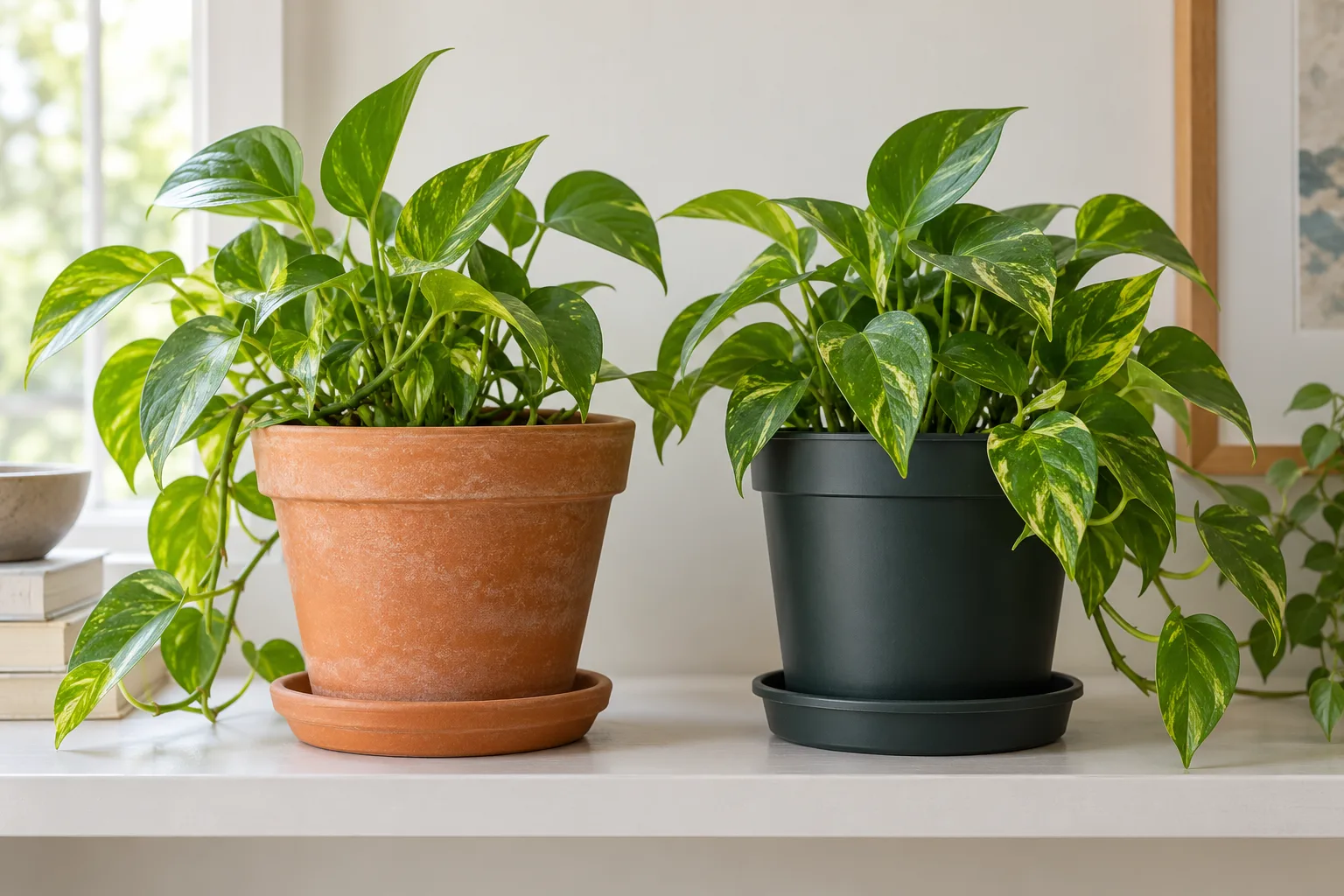
Unglazed terracotta is porous and usually loses moisture faster; plastic is lighter and the mix may stay moist longer. Both need suitable drainage, potting mix and watering checks.
Compare unglazed terracotta and plastic
Here, terracotta means unglazed, porous clay. Some moisture can pass through the wall, so under similar conditions the mix usually dries faster than in plastic. Clay pots are also heavier and can break if dropped.
Plastic pot walls generally do not absorb water. The pots are light and the mix may stay moist longer, making them easier to move. Glazed ceramic behaves differently from unglazed clay; do not judge porosity from color alone.
Match the choice to the plant and your routine
Cacti and some succulents that prefer a quicker dry-down may suit a draining unglazed clay pot. Some ferns that prefer steadier moisture may be easier to manage in a draining plastic pot. The species and the potting mix still matter.
If you often forget to check moisture, a faster-drying pot may require closer attention. If you water frequently, switching to clay does not remove the risk of overwatering. Compare pots with similar size, mix, light and plant condition.
Check drainage holes before the material
For ordinary soil-grown houseplants, choose a pot with drainage holes and a size appropriate for the root ball. A decorative pot without holes can hold a draining inner pot: remove it to water, let it drain and empty the outer pot before returning it.
Clay does not guarantee healthy roots, and plastic does not automatically cause waterlogging. A layer of stones cannot replace a drainage hole; an oversized pot or unsuitable mix can also keep roots wet for too long.
After changing pots, learn the new drying rhythm
A healthy plant does not need frequent repotting just to change materials. When repotting is needed, consider the roots, pot size and plant together. Check below the surface instead of carrying over a fixed watering interval.
Seasons, position, temperature and airflow also affect drying speed. Empty the saucer after watering and observe the same pot over several checks before adjusting your routine.
Consider weight, stability and cleaning
A lighter plastic pot may be easier to move when a plant is large; a tall plant also needs a stable container and position. A pale crust on the outside of unglazed clay can sometimes come from mineral salts.
Clean reused pots and inspect them for cracks and open drainage holes. The cover shows two container styles in a generated scene; it is not a drying-speed experiment.
Common questions
Is terracotta always better than plastic?
No. Unglazed clay usually dries faster, while plastic is lighter and can retain moisture longer. The plant, pot size, mix and environment matter too.
Does a plastic pot need drainage holes?
For most soil-grown houseplants, yes. A decorative pot without holes can hold a draining inner pot; empty any collected water after watering.
Can a terracotta pot prevent root rot?
Not by itself. Excess watering, blocked holes, an oversized container or an unsuitable mix can still leave roots wet for too long.
How often should I water after repotting?
There is no interval that suits every plant. Check moisture below the surface and consider the species and conditions before watering.