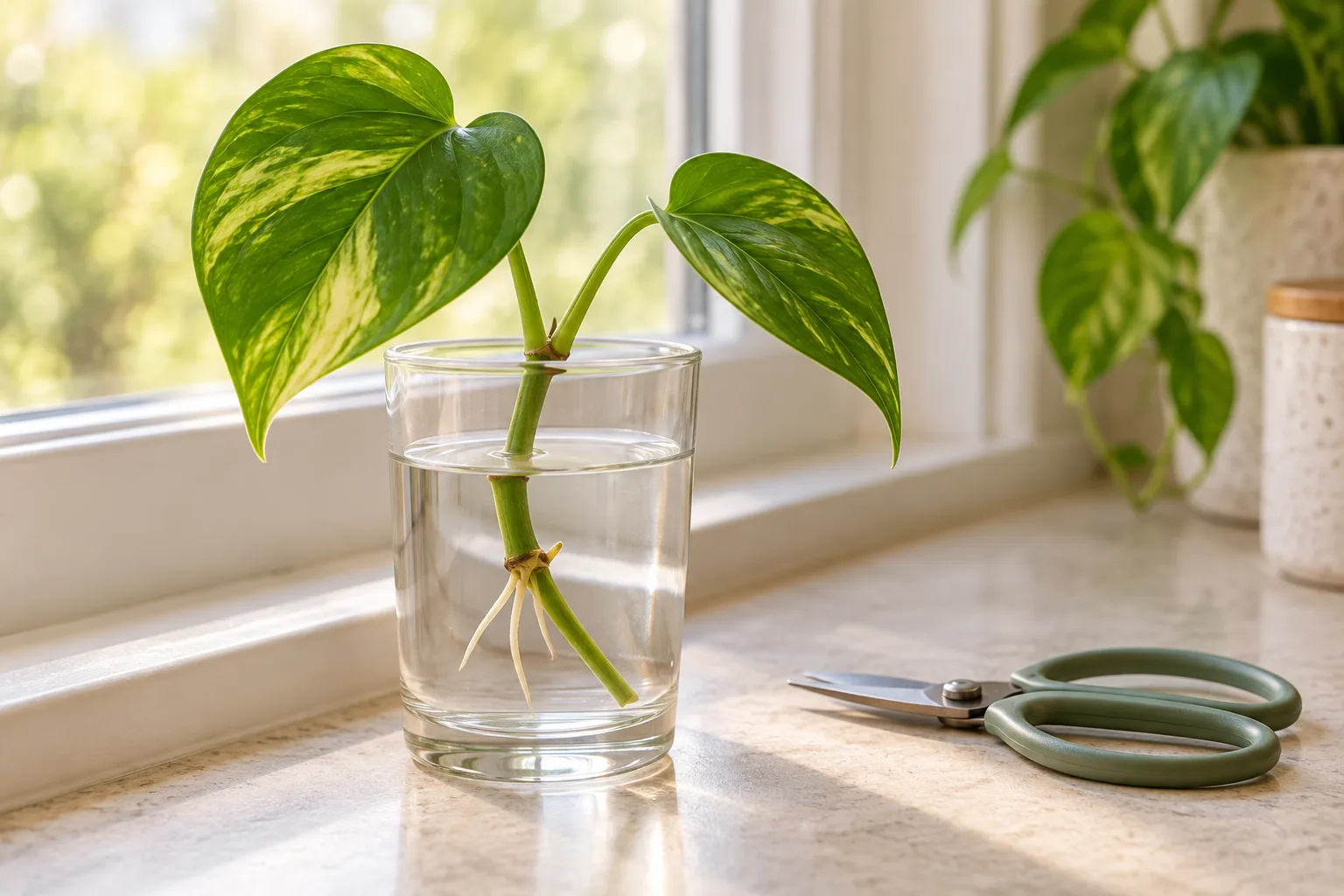
Take a healthy section with nodes using clean, sharp scissors. Keep at least one node underwater and the leaves above it; refresh the water and watch for roots in bright indirect light.
Find a node, not just a leaf
A node is where a leaf stalk joins the vine; a small bump or aerial root may be visible there. Roots can develop near a node. A pothos leaf without a stem node is not a reliable way to produce a new vine.
Choose a healthy vine without obvious pests or disease. Pothos sap can irritate skin, and its leaves should not be chewed by pets; wear gloves and keep cuttings and water away from children and animals.
Take a healthy section with nodes
Use clean, sharp scissors. First choose a node to leave on the parent plant and cut just above it. Then inspect the removed section and trim below its lowest node, so that this node remains on the cutting.
A short section with two nodes is a useful starting point. Keep healthy upper leaves and remove any lower leaves that would sit in water. Do not remove most of the parent plant’s healthy foliage at once.
Place the node in a clean jar
Stand the lower stem in a clean, stable jar of room-temperature water. Keep a lower node submerged and the leaves above the surface; avoid direct sun that could overheat the water.
Place the jar in a warm location with bright indirect light. Iowa State University recommends changing water once or twice a week and maintaining its level so developing roots stay submerged. Clean the jar and refresh sooner if the water becomes cloudy.
Watch the roots and stem, not just the calendar
Rooting time depends on temperature, season and the cutting. If a stem becomes black, soft or smelly, take it out and investigate; clean the tools and container rather than leaving decaying material with other cuttings.
Once roots have formed and grown, prepare a small draining pot and a suitable mix if you want a soil-grown plant. Iowa State gives approximately one inch as a transplant reference. Water-grown roots must adjust to mix, so some temporary stress is possible.
This method does not fit every plant
These steps are for pothos and similar vines that root in water. Succulents, cacti and other plants may need different cutting and drying methods. The image is illustrative, not a measured rooting test or cutting diagram.
Common questions
Can a single pothos leaf grow a new vine?
A leaf without a stem node is not a reliable way to produce a new vine. Take a healthy stem section that includes a node.
How long does rooting take?
It varies with the cutting and conditions. Observe the node and roots instead of relying on a guaranteed number of days.
Should the jar stand in direct sun?
Choose bright indirect light and avoid prolonged direct sun and overheated water.
Must I move a rooted cutting to soil immediately?
No. If you want to grow it in mix, use the linked transplant guide once roots have formed and watch the plant adjust.