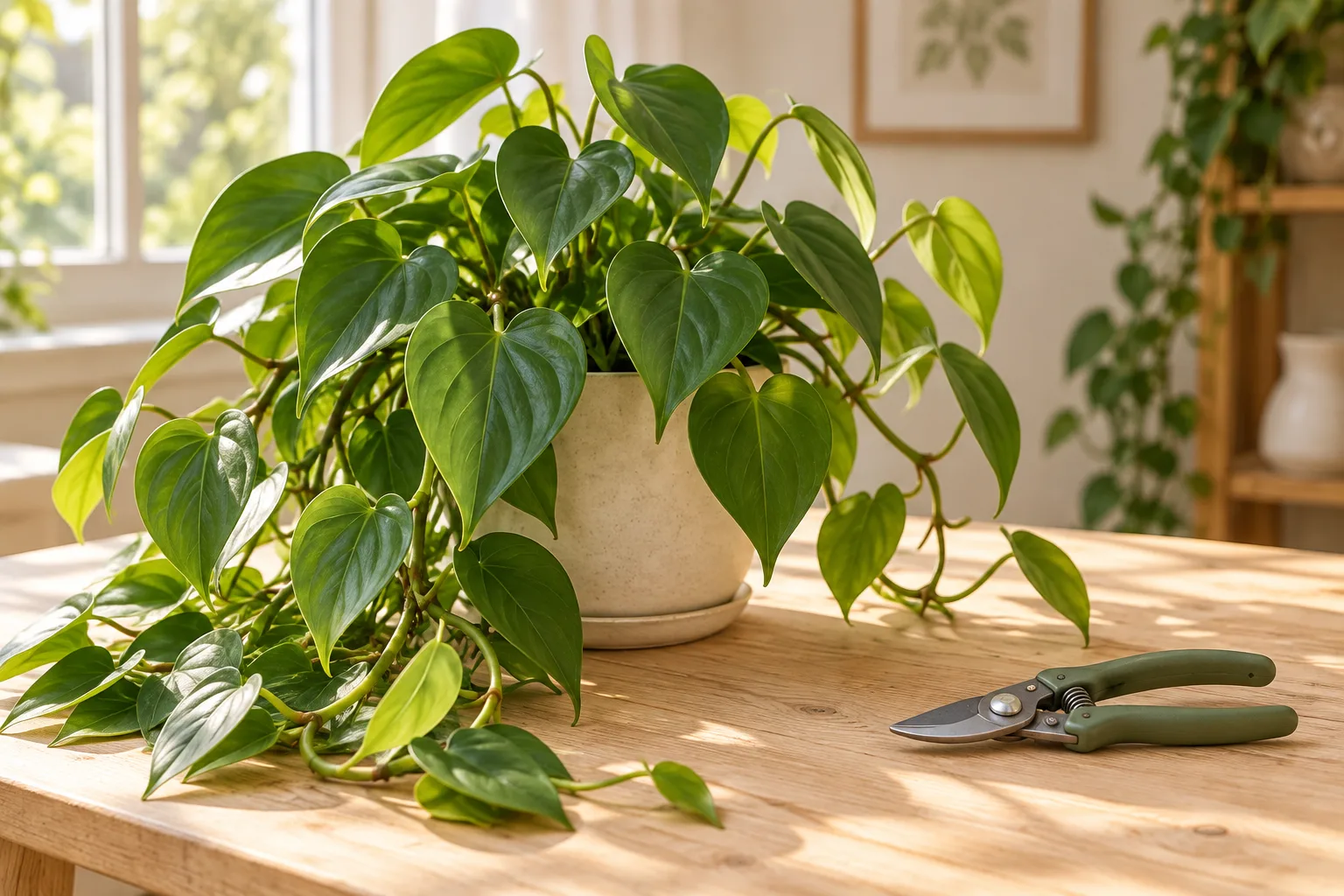
Check that the plant tolerates pruning and clean the shears. To shorten a suitable vine, cut just above a node that stays on the plant and observe the response. Pinching may encourage side growth, but branching is not guaranteed.
Decide why and when to prune
Removing dead material and shaping an overlong vine are different tasks. Shape a healthy vine when conditions support active recovery; broken or diseased material may need earlier attention. If a plant is newly repotted, very dry or declining, investigate before heavy pruning.
Flowering plants may form buds on particular stems. Palms and other plants with a single growing point have a different structure from a vine. Check the species rather than applying one method to every plant.
Clean the tool and locate a node
Use sharp scissors or pruners and remove soil and sap from the blades first. Iowa State University describes wiping tools with 70% isopropyl alcohol. For suspected disease, disinfect at least between plants and ideally between cuts, following the product instructions.
A node is commonly where a leaf stalk joins the stem. Decide which node will remain on the parent. A long vine can also be supported or trained if space is the only issue; it does not always need cutting.
Make a small cut above the node to keep
For a vine suited to pruning, cut above the chosen node without damaging it. An unwanted side branch can instead be removed where it joins the larger stem. Pinching removes a small amount of soft tip growth and may encourage side shoots.
Start with a few stems and observe the overall shape and later growth. Responses vary by plant; a cut does not guarantee a particular number of new shoots.
Keep appropriate light and watering afterwards
Remove fallen leaves and cut material from the mix. Return the plant to light suitable for its species and water when its mix needs it. Do not automatically add extra water or concentrated fertilizer after pruning.
Long spaces between leaves and smaller growth can indicate inadequate light. Pruning changes the shape but does not correct the growing conditions; assess light and adjust gradually to avoid sudden sun exposure.
Can the removed vine be propagated?
A healthy, pest-free pothos section with a node can be rooted in water. Distinguish the node you leave on the parent from the node that must remain on the cutting. Do not propagate visibly diseased material.
Pothos and philodendron sap can irritate skin and are unsafe for pets to chew; wear gloves and dispose of trimmings safely. The cover is a still-life illustration, not a cutting diagram.
Common questions
Will each cut produce two new branches?
Not necessarily. Pinching can encourage side growth, but the response depends on the plant, node and conditions.
Should every yellow leaf be removed immediately?
First investigate the cause. Dead or badly damaged leaves can be removed, but avoid taking off large amounts of healthy foliage at once.
Does pruning alone fix a leggy plant?
It can improve the shape; also assess light, water and the plant’s normal growth habit, then improve conditions gradually.
Can every houseplant be cut above a node?
No. Palms with a single growing point and flowering plants with particular budding habits need species-specific guidance.