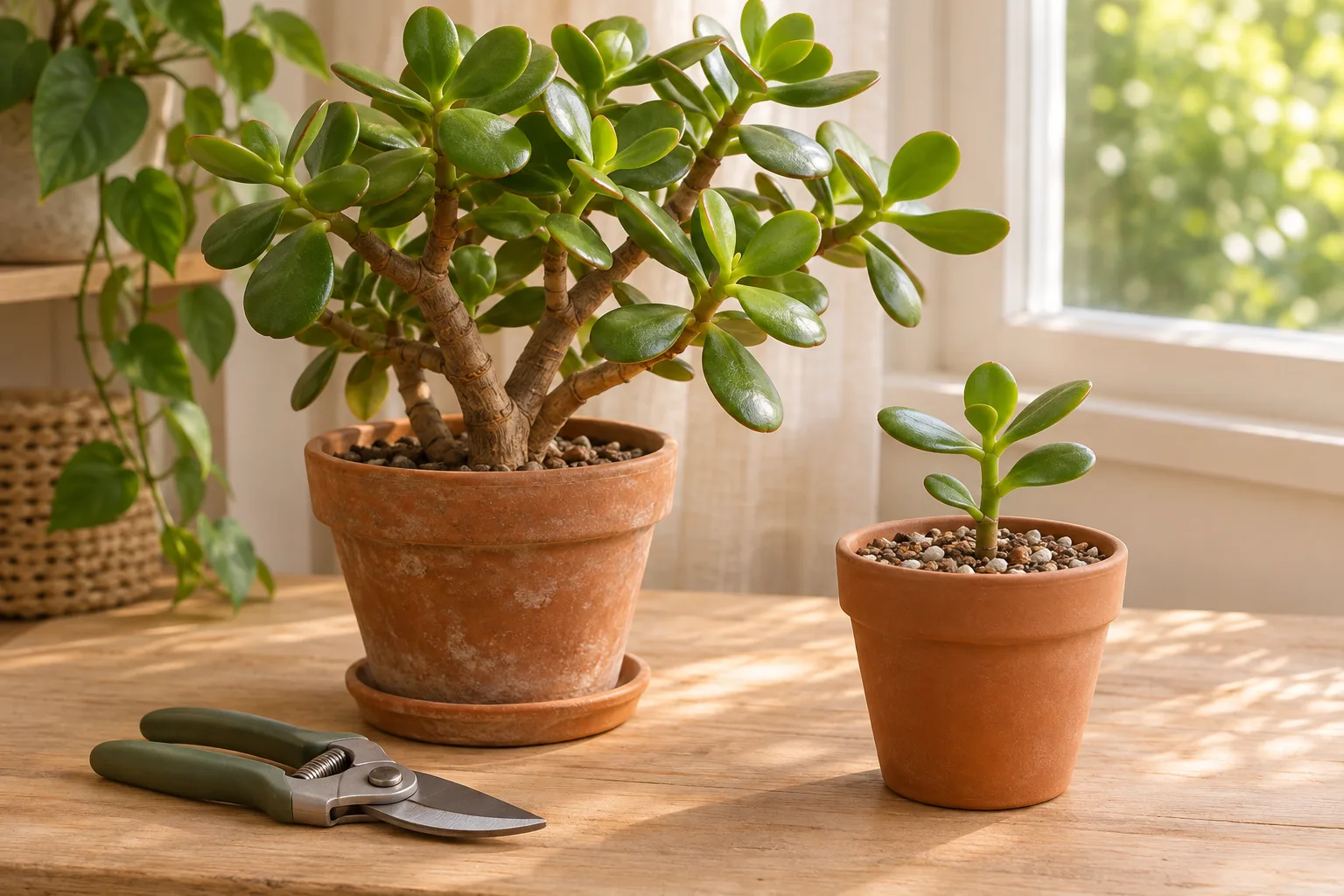
Use clean sharp shears to take a healthy stem and remove lower leaves that would be buried. Let the cut end callus for several days, plant in a small draining pot and keep the mix on the dry side while roots form.
Choose a healthy stem and clean tools
Start with a healthy jade plant (Crassula ovata) without obvious pests or rot. Select a section that can stand securely and cut it with clean, sharp shears. Iowa State gives roughly 3–6 inches as a common succulent-stem reference; suit the cutting to the plant and pot.
Gently remove leaves from the lower part that will touch the medium and keep healthy upper leaves. Jade is toxic to cats and dogs, so keep cuttings and plants away from pets and children.
Let the cut surface heal
Set the cutting in a dry, airy place out of harsh direct sun so the cut end dries and forms a callus. Wisconsin and Iowa State both suggest allowing several days. The time depends on the cut and conditions; look at the surface rather than treating a fixed number of days as a guarantee.
Do not rush a wet, soft cut into damp mix. If black, soft decay or an odor continues to spread, investigate before using the cutting; do not treat obviously rotting tissue as healthy material.
Use a small draining pot and airy mix
Choose a small pot with clear drainage holes and a well-drained succulent medium. Insert the healed base shallowly and support it gently, with leaves above the surface. Avoid an oversized pot that holds excess wet mix for a long time.
Horticultural sources differ slightly on the starting moisture of the medium; they agree on good drainage and avoiding saturation. A dryish or lightly moist medium is reasonable; do not leave an unrooted succulent stem soaking in water.
Water and light while roots develop
Provide a bright position, initially sheltered from sudden harsh direct sun, and temperatures appropriate for jade. Check the mix and add a little water when dry; empty the saucer and do not keep an unrooted cutting continuously wet.
Rooting time varies with the cutting, temperature, medium and season. Do not pull it out every day. New growth can be a clue; if checking stability, use a very gentle touch to avoid tearing young roots.
When can it receive established-plant care?
Once roots are established and growth is steady, gradually acclimate the plant to the brighter light jade needs and adjust watering to its mix and conditions. Do not rush to apply concentrated fertilizer or promise rooting within a fixed number of weeks.
This guide focuses on stem cuttings. Jade leaves can also propagate, but the method and waiting time differ. The cover is an illustration, not a rooting trial.
Common questions
How long should a jade cutting dry?
Allow several days for the cut end to dry and callus. The actual time depends on the cut and environment.
Can I leave a jade cutting submerged in water?
Succulent stems are commonly rooted in a well-drained medium. Prolonged soaking can increase rot risk; this guide does not recommend leaving an unrooted stem immersed.
Should I water a jade cutting every day?
No. Check the medium and avoid leaving it saturated or standing in a saucer of water.
Do wrinkled leaves prove roots have formed?
No. Water loss, roots and conditions can all affect leaves; look at stability and new growth together.