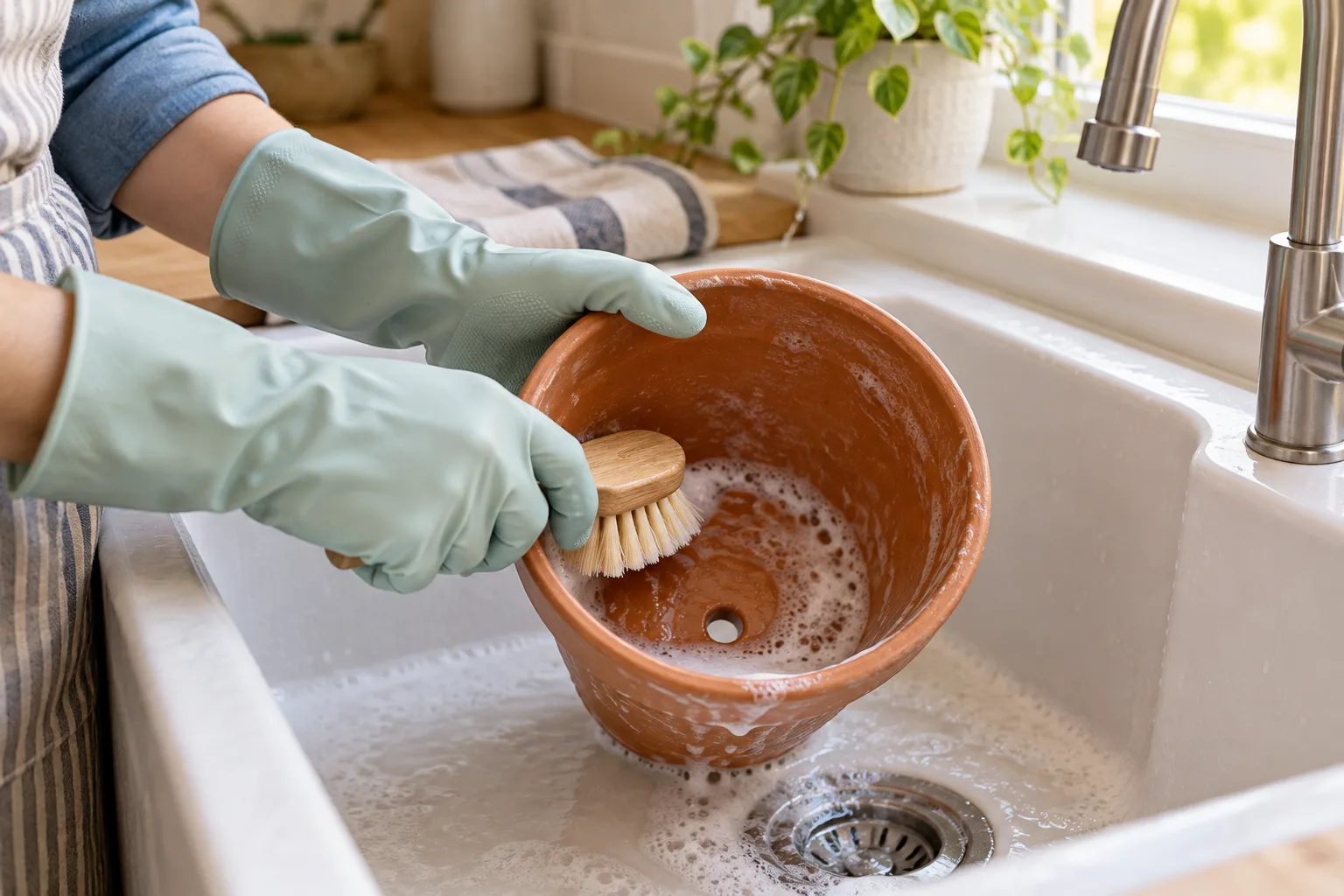
Brush soil from the empty pot and holes, wash with soapy water and rinse. Use a disinfectant suitable for the container according to its label, including rinsing directions. Do not apply disinfectant to a planted pot.
Empty and inspect the pot
Remove the plant and old mix, then check for cracks, sharp edges and drainage holes. Do not reuse a pot that is unstable or cannot be cleaned. Remove its saucer for separate cleaning.
Brush away soil, old roots and fallen leaves, especially around the rim, inside corners and holes. Do not transfer mix from a potentially diseased plant directly to another pot, and keep debris away from healthy plants.
Wash with soapy water and rinse
Use a brush or cloth and soapy water on the inside, outside, rim and holes, then rinse with clean water. Removing visible debris first matters because soil can interfere with disinfection.
Plastic and glazed surfaces are generally easier to clean; unglazed clay is porous and may need more careful brushing. Use a method that does not damage the container.
Choose a suitable disinfecting method
Once the pot is washed and rinsed, choose a locally permitted product suitable for garden containers. Follow its label for dilution, contact time and protective equipment; ask a local extension service if you cannot determine whether it is appropriate.
Work in a ventilated area and use the protective equipment the label specifies. Never mix bleach with other cleaners or acids, and keep disinfectants away from plants. Products have different strengths, so do not apply an unverified one-size-fits-all recipe.
Rinse, inspect and store cleanly
After treatment, rinse thoroughly as directed by the product label, ensure the drainage hole is clear and place the pot somewhere clean. When ready to plant, use a mix suited to the plant. Iowa State's container guidance also calls for rinsing after disinfection.
Porous terracotta can absorb water and may accumulate mineral deposits on its rim or walls. Check for residue as you clean, and do not mix chemicals to remove white marks.
Cleaning reduces risk; it does not diagnose disease
University of Minnesota Extension notes that soil and plant debris can carry plant pathogens, and cleaning and disinfection can reduce their spread. That does not mean every white mark is a disease or guarantee that every problem is eliminated.
If the previous plant died for an unknown reason, serious disease is suspected or the pot cannot be cleaned, ask a local horticultural service for advice. Clean the brush and work area before moving on to another pot.
Common questions
Should I clean a used pot that looks clean?
Before reuse, remove debris, wash and disinfect as appropriate for the container and product. Not all residue is visible.
Can I pour bleach into a pot with a plant in it?
No. Empty the container first, follow the suitable product's label and rinse as directed before replanting.
Are white marks on terracotta always mold?
No. They may be mineral deposits. Inspect and clean them rather than diagnosing disease from color alone.
Does washing alone disinfect a pot?
Washing and disinfection are different steps. Removing debris first and then following a suitable product's instructions helps reduce spread, but does not guarantee elimination of every pathogen.