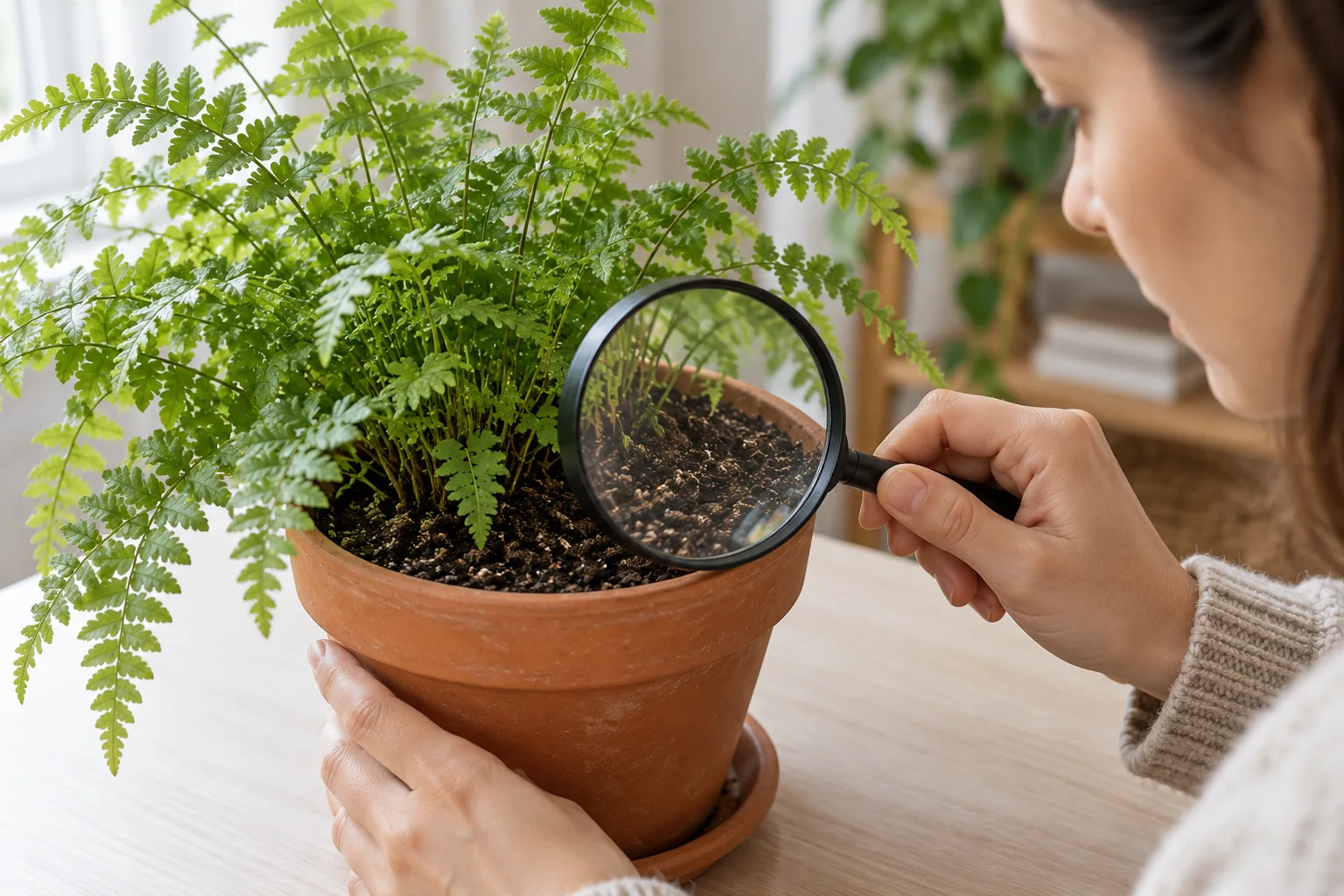
White fuzz may be fungal growth; a hard pale crust may be mineral or fertilizer salts. Appearance is a clue, not a diagnosis. Check the mix and drainage before gently addressing the cause.
Is it fuzz, a crust or a potting-mix particle?
Moist potting mix can develop a white-to-gray fungal layer that looks fine or fuzzy. A hard white or tan crust can instead indicate mineral or fertilizer-salt deposits.
Some white particles are ordinary ingredients already present in a potting mix. Check whether they were there from the start and whether the material has spread over the surface. Color or a picture alone cannot identify a fungus; ask a local horticultural service if unsure.
Check moisture below the surface and inspect drainage
Gently feel beneath the surface to see whether the mix is still wet. Check that drainage holes are clear and that the saucer or decorative outer pot is not holding water. Empty excess water and give neighboring pots room for air circulation.
Do not automatically water again or dry every plant completely because the surface is white. Allow the surface to dry as appropriate for that particular plant before deciding when to water; seedlings and moisture-loving plants need their own care.
How to handle a small patch of suspected surface growth
For a small surface patch, gently remove the affected top layer with a clean tool in a place that is easy to clean. Avoid damaging roots or stirring up dust, bag the removed material and clean the tool. If roots are exposed or you are concerned about contact with mold, do not force the job; seek advice first.
University of Maryland Extension notes that algae or fungi on the surface usually do not directly harm the plant, although a thick mat can interfere with water entering the mix. Review watering and airflow afterward or the growth may return.
If it looks more like a hard crust, review water and fertilizer
A pale crust on the mix or pot rim may be associated with minerals in water or fertilizer salts. Review recent fertilizer use and the water source, and check drainage rather than applying a fungicide based on color alone.
If the pot drains, the plant tolerates it and the mix is ready for water, water from above according to the plant's needs and let excess drain away. If the mix has stayed wet, the pot lacks drainage or the plant is declining, do not force a flush; ask a horticultural service for guidance.
When to investigate further
Rapidly spreading or recurring growth, a persistent wet mix, an unpleasant smell, a soft stem base or continued wilting can signal more than a surface issue. Record watering and changes in the plant, and ask a local horticultural professional when needed.
White powder on leaves or mold on flowers is a different problem from a layer on the potting mix. Do not automatically use this method there or apply vinegar, bleach or an unverified home remedy to the plant.
Common questions
Is white material on potting soil always mold?
No. Fuzz may be fungal growth, a hard pale crust may be salt deposits, and some white particles are normal mix ingredients. Appearance provides clues, not certainty.
Must I repot immediately if I see white fuzz?
Not necessarily. Check moisture, drainage and plant condition first. A small surface patch may be removed gently; seek advice if it recurs or the plant declines.
Can I water when the soil surface looks white?
Check the moisture below the surface and the plant's needs first. If the mix is still wet and the saucer holds water, empty the saucer rather than watering just because the top is white.
Does the illustration show actual mold?
No. It illustrates checking potting mix and does not depict a real fungal sample or identify a species.