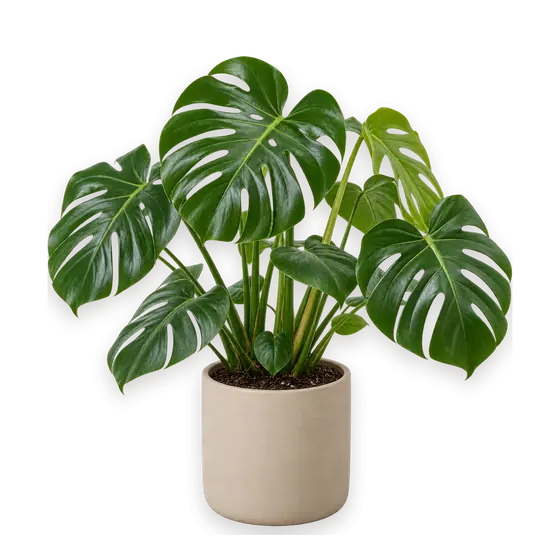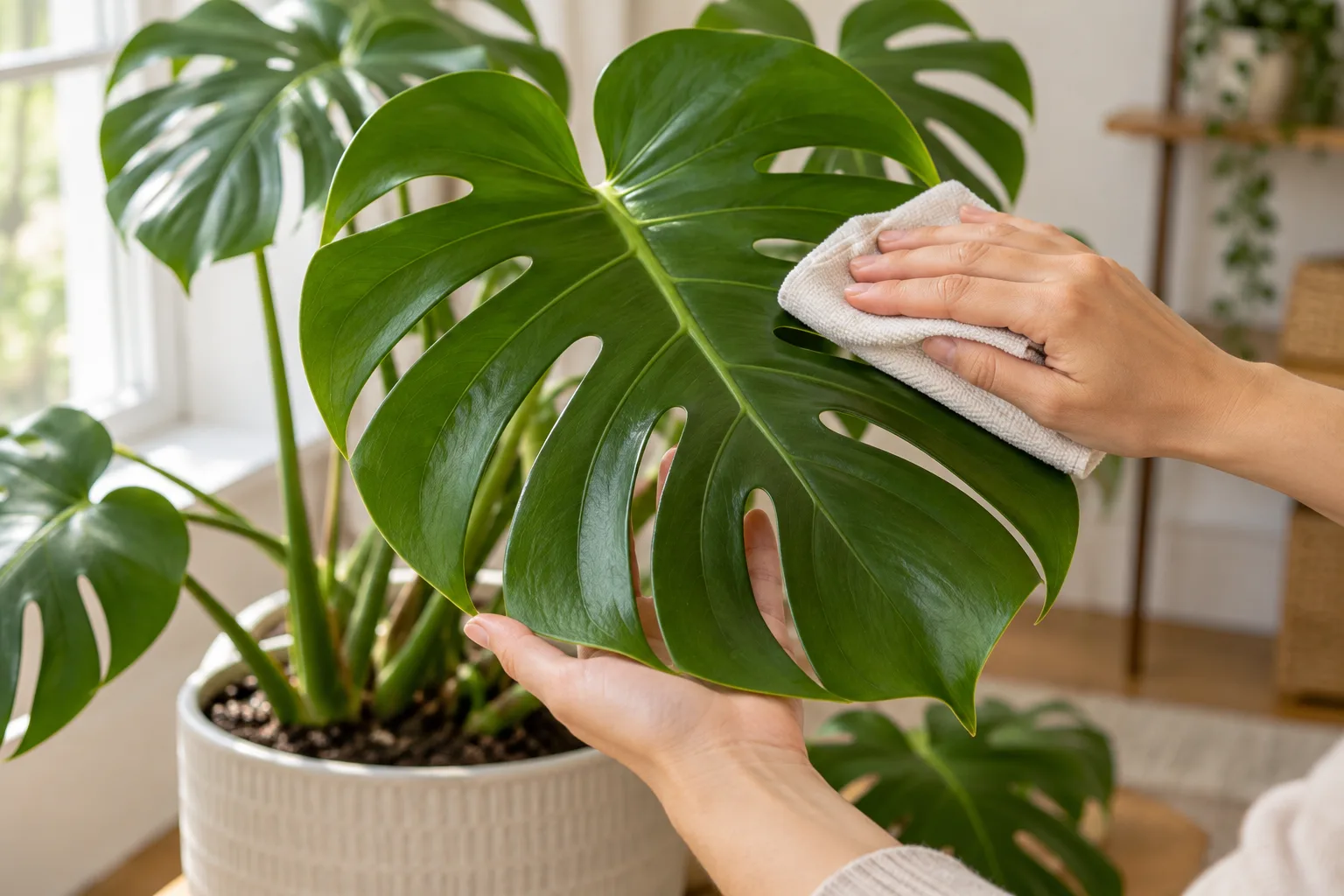
For ordinary dust on smooth leaves, start with plain water and a soft cloth. Support the leaf while wiping. Check the plant's care needs before handling fuzzy, spiny or naturally powdery surfaces.
Choose a method for the leaf surface
This guide addresses ordinary dust on indoor potted plants. Thick, smooth foliage such as a mature Monstera or peace lily leaf can usually be cleaned with a soft, barely damp cloth. A heavy coating of dust can reduce the light reaching the leaf; cleaning is also a chance to look underneath it.
Hairy, spiny, naturally powdery or delicate leaves need a gentler, plant-specific approach. Do not rub repeatedly to make them shine. Cleaning is routine maintenance, not a substitute for suitable light, watering or pest care.
Smooth, broad leaves: wipe with plain water
Dampen a clean, soft cloth or sponge with room-temperature or lukewarm water, then wring it out so it is not dripping. Leave a heavy pot in place and protect the surface around it with a towel if needed.
Support the underside of the leaf with one hand and gently wipe from the base toward the tip with the other. You can clean the underside in the same way. Skip newly unfolding or fragile leaves, and do not pull on the leaf stalk.
Rinse the cloth as it picks up dust and use a clean one for the next plant. Allow the foliage to dry in a well-ventilated place, without leaving water pooled in the crown, flowers or leaf joints.
Fuzzy and unusual foliage: start with a dry, soft brush
For African violets and other fuzzy leaves, use a clean, soft artist's brush to lift loose dust gently without flattening the hairs. Sources differ on whether fuzzy leaves can be wiped damp; a dry brush is a conservative starting point when you are unsure.
Do not treat cacti, spiny plants or leaves with a natural powdery coating like a broad, smooth leaf. Avoid gripping spines or rubbing off the coating; check the particular plant's care instructions first.
Can you rinse a houseplant?
A plant that is safe to move and tolerates wet foliage can be rinsed gently in a sink with lukewarm water. Check the temperature and pressure first, avoid flowers and moisture-sensitive crowns, and keep the stream gentle enough not to bend tender leaves.
Let the plant drain and empty its saucer or cover pot. If the mix is already wet, do not treat a rinse as an extra watering. Skip rinsing fuzzy leaves or any plant whose tolerance for wet foliage is uncertain.
Skip milk, oils and leaf-shine products
Ordinary dust rarely calls for a cleaning product. University of Minnesota Extension advises against milk and leaf-shine products, while Iowa State University Extension notes that household detergents can damage a leaf's protective surface.
Do not apply cooking oil or an unverified home mixture simply to make foliage glossy. A mark that does not wipe away may not be dust, and forceful rubbing can damage the leaf.
If a mark will not wipe away, inspect it
Fine webbing, moving specks, sticky residue or spots that spread deserve a closer look; none should be assumed to be ordinary dust. Check beneath leaves and around leaf joints, and separate the plant from others for observation if needed.
Wiping or rinsing can remove some surface pests, but it does not prove an infestation is resolved. Identify the problem before choosing a treatment, and clean cloths and brushes before using them on another plant.
Common questions
How often should I clean houseplant leaves?
There is no interval that suits every home. Inspect leaves regularly and clean visible dust using a method suited to the plant; delicate foliage does not need unnecessary handling.
Can I wipe Monstera leaves with a damp cloth?
Mature, smooth leaves can usually be wiped gently with a soft cloth dampened with plain water. Support each leaf from beneath and avoid fragile new growth.
How do I dust African violet leaves?
Start with a clean, soft, dry brush and gently lift loose dust. Avoid leaving water in the hairs or crown, and check plant-specific advice if the foliage is damaged or unusual.
Are white marks that remain after wiping always pests?
No. Residue, water marks, natural patterns and pests or disease can look similar. Check whether the marks move or appear with webbing or sticky residue, and consider the plant's overall condition.