PetalPal
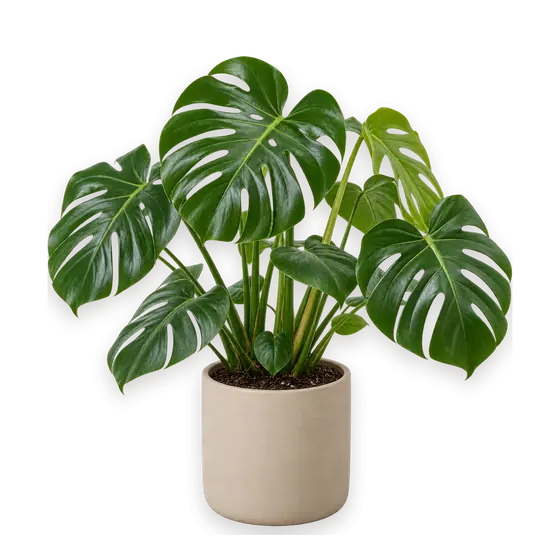
The sap contains calcium oxalate and is toxic to cats and dogs.
Bright, indirect light; avoid scorching sun
Let the compost approach dryness, then water thoroughly
18–25°C, away from cold drafts
Balanced liquid fertilizer during active growth
Do this when you get home
- Choose a bright position away from harsh direct sun.
- Check that the pot drains and empty standing water from the outer container.
- When repotting is needed, use a free-draining mix and a pot only a little larger than the rootball.
Day to day
- Check the compost before watering; a calendar alone cannot tell you whether it is still wet.
- Wipe dusty leaves. Give climbing stems a moss pole or other stable support.
- Keep the plant warm and away from radiators. Keep it out of reach of children and pets.
Common questions
How often should I water a Monstera indoors?
Check the compost first. Let it approach dryness, then water thoroughly and let excess water escape. Water less often in winter; never leave the pot standing in water.
Why are my Monstera leaves not splitting?
Juvenile leaves often have no holes. Mature plants need adequate indirect light and can benefit from climbing support. Judge new growth rather than expecting an existing leaf to change.
Does a Monstera need direct sunlight?
Bright, indirect light suits it. Strong direct sun can scorch leaves, while very dim conditions can mean fewer holes.
Why are the leaf edges turning brown?
Dry indoor air can contribute. Check the plant’s location and watering conditions rather than assuming every brown edge has the same cause.
Care references
- Royal Horticultural Society — How to grow Swiss cheese plants
- Royal Horticultural Society — Monstera deliciosa plant profile
These sources support the care guidance above. Flower meanings and gifting symbolism are cultural references. How we maintain this guide