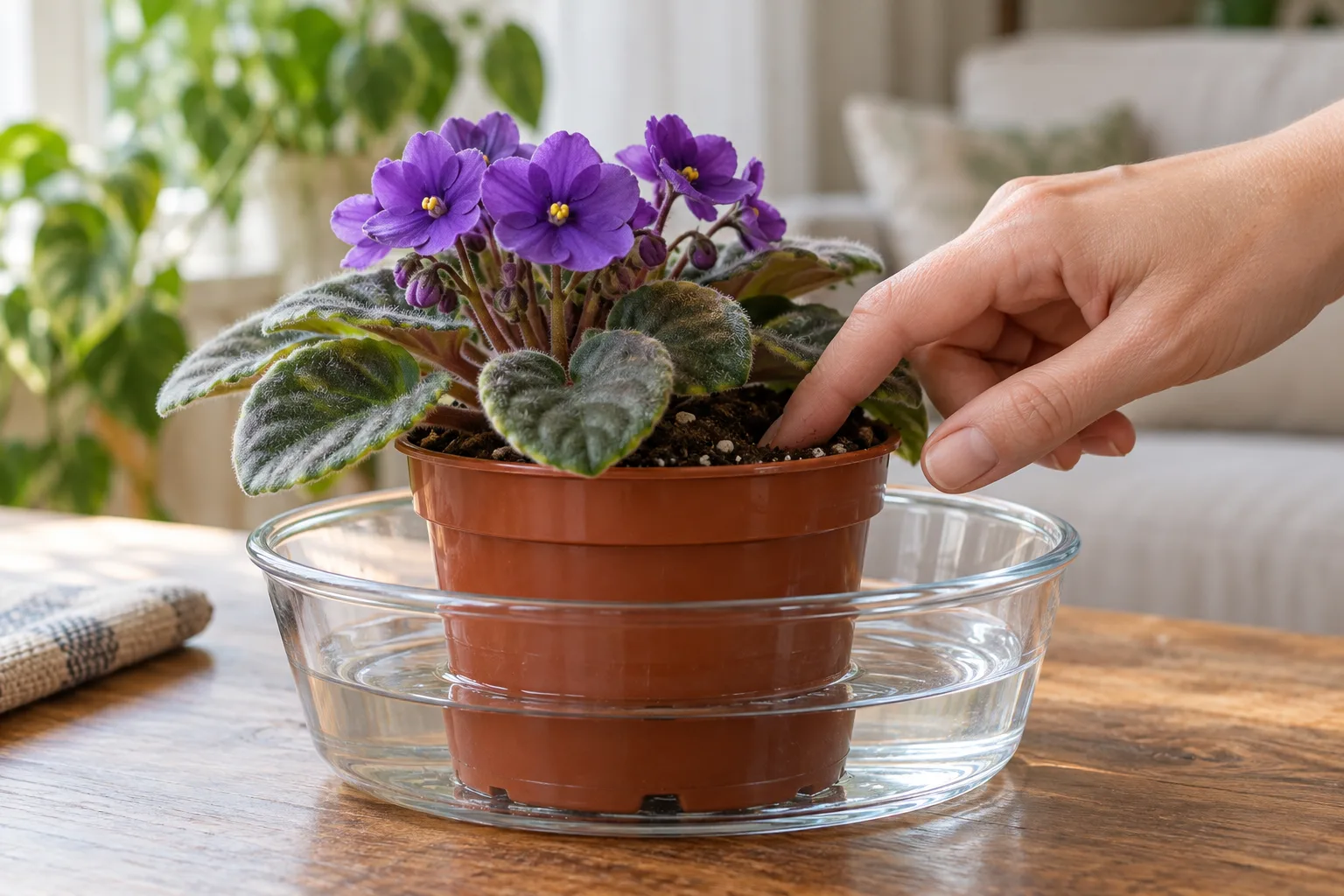
Use a pot with open drainage holes, place its base in shallow water and check the mix. Remove and drain it once watered; bottom watering does not prevent overwatering and does not suit every plant or mix.
When might bottom watering help?
For a small plant whose mix is ready for water and whose pot can be moved safely, bottom watering is one option. It can help keep water off the foliage of plants such as African violets.
Check the species' needs and feel below the surface first. If the mix is still wet, roots are unhealthy or the cause of wilting is unclear, do not soak just because leaves droop. Very coarse bark mixes may wet unevenly and need species-specific care.
Prepare a draining pot and a clean shallow basin
Remove the nursery pot from any decorative outer pot and ensure its bottom holes are open. Add a little room-temperature water to a clean basin where the pot can stand securely; keep the water below the pot rim and away from stems and leaves.
Use clean water separately for each plant, particularly when pests or disease are suspected. Clean the basin before and after use to reduce the chance of transferring a problem.
Watch the mix and remove the pot promptly
Stand the pot upright in the shallow water and watch for the mix to become moist. Virginia Cooperative Extension describes 15 to 30 minutes as a common range, but pot size, mix and dryness change the time; do not rely on a timer alone.
Feel the surface and just below it. Once the mix is moist, lift out the pot, let excess water drain through the holes and empty the saucer or outer pot before returning it. Do not leave the pot sitting in water.
What if the mix is still dry after half an hour?
Take the pot out and check whether the holes were in contact with the water, whether they are blocked, and whether the mix has dried so much that it resists rewetting. If appropriate for the plant, slowly water from above in small passes and check for even absorption.
Do not leave a pot soaking unattended merely because the surface is still dry. If the mix will not absorb water, stays wet for a long time or the plant is declining, check roots and drainage and seek horticultural advice.
Still watch for salts and the next watering
Repeated bottom watering can allow mineral or fertilizer salts to accumulate on the mix surface. For a plant that tolerates watering from above and is due for water, occasionally water from the top as appropriate and allow the excess to drain away.
Do not repeat the soak on a fixed daily schedule. Decide next time using the species, conditions and mix moisture. The cover is an illustration, not a measured watering test.
Common questions
How long should I bottom water a plant?
Fifteen to 30 minutes is a common observation range, but check the mix. Absorption varies; remove and drain the pot rather than leaving it in water.
Can I bottom water a pot without holes?
Water needs a path into the mix. Use a draining inner pot inside a decorative outer pot, and remove it to water and drain.
Does bottom watering prevent overwatering?
No. Frequent soaking or leaving a pot in water can still keep the root zone too wet.
Can several plants share the same basin of water?
To reduce cross-contamination, especially when pests or disease are suspected, use clean water and a clean basin separately for each plant.