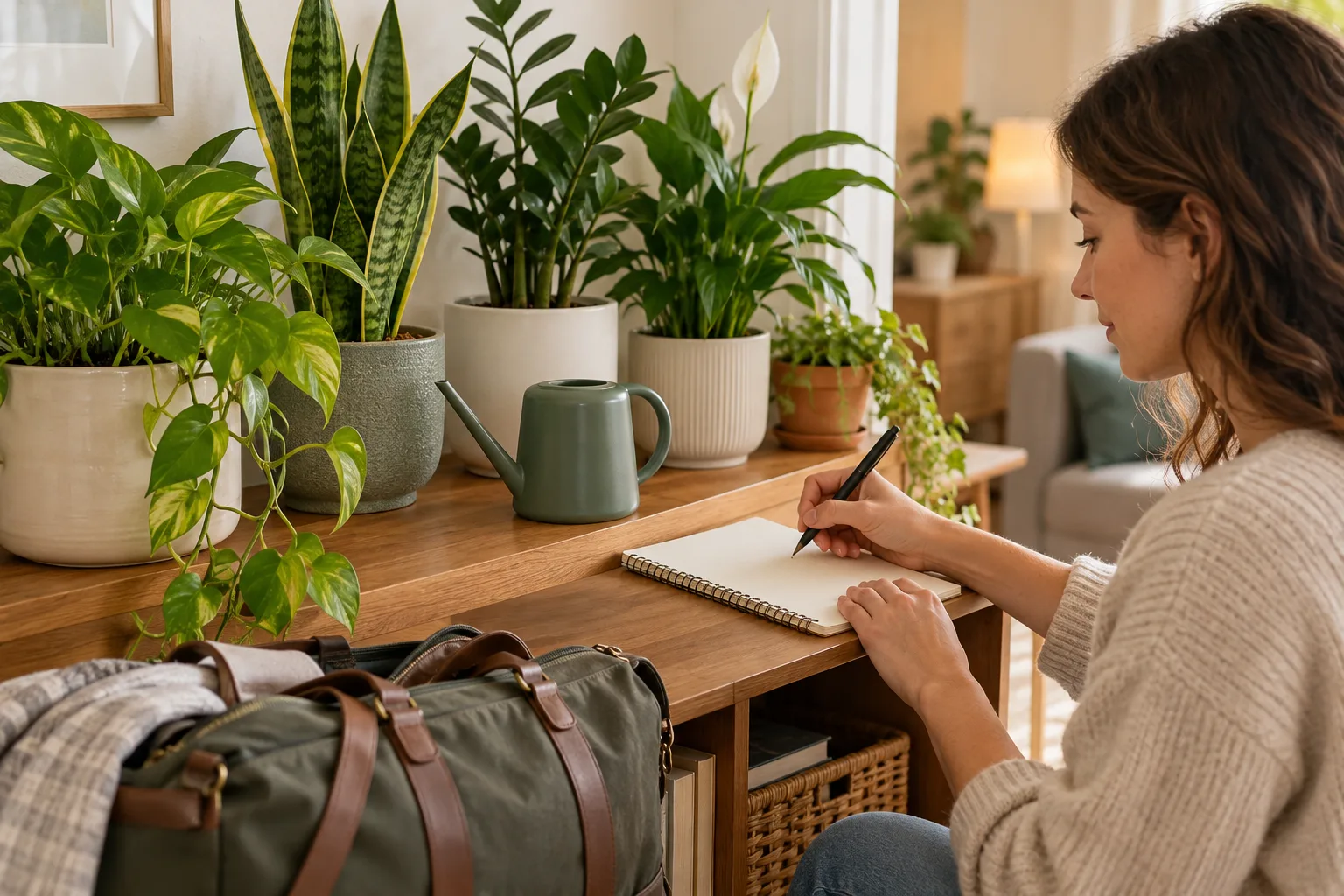
Check each pot before leaving rather than giving every plant extra water. Test a wick or self-watering pot in advance, and arrange regular checks for a longer absence or whenever the setup is uncertain.
Observe and group plants by their needs
In the days before leaving, notice how quickly the mix dries and note each plant's identity, location and most recent watering. Small pots, warmer or brighter spots and actively growing plants may need closer attention.
Do not give moisture-loving plants and cacti or succulents that need a dry-down the same automatic supply. No device guarantees a fixed number of safe days for every plant.
Check the mix on departure day
Feel below the surface. If the plant is ready for water according to its normal needs, water it and allow excess to drain; if the mix remains moist, do not add water merely because you are travelling. Empty saucers and outer pots.
Maintain suitable light and temperature rather than putting plants in complete darkness or directly beside a hot or cold air vent. If moving them, consider how that species tolerates a change in light.
Test a watering wick before departure
For a plant that tolerates steadier moisture, extension guidance describes pre-wetting a wick, placing one end in a clean water reservoir and the other in contact with the potting mix. Insert it gently, avoiding roots where possible, and secure the setup so the reservoir cannot tip.
Allow time to try it before the trip. Check that the wick stays wet, the mix is not becoming soggy, the reservoir does not empty too soon and the surface underneath stays dry. Material, position, mix and the plant affect performance; choose another plan if the test is unreliable.
Arrange a check-in for longer trips
Ask a trusted person to check the mix, saucers and plant condition as needed instead of watering every pot on the same schedule. Leave plant names, locations, simple checking instructions and a way to contact you if something looks wrong.
Self-watering pots and timers also need a trial to check supply and drainage. For seedlings, recently repotted plants or plants already declining, prioritize a person who can actually inspect them.
After you return, check before watering
Inspect the reservoir, potting mix and saucer, and look for unusual leaf drop or pests. Wilting is not always caused by thirst; if the mix is still wet and the base is soft or smells unpleasant, do not immediately add water.
If the plant truly needs water, resume normal care according to its needs. Note what worked for your next trip. The cover is an illustration of planning, not a watering experiment.
Common questions
Should I give every plant extra water before leaving?
No. Check each mix and plant first. Adding water to an already wet pot can leave roots too wet.
How long will a wick water a plant?
There is no universal number of days. Reservoir size, wick, mix, temperature and the plant all matter, so test first and arrange checks when needed.
Can I keep a succulent on a wick constantly?
Plants that need a dry-down generally should not be kept continually wet. Follow the species' needs and ask someone to check if unsure.
Should I water a wilted plant as soon as I return?
Feel the mix and check drainage first. Both too little and too much water can accompany wilting.