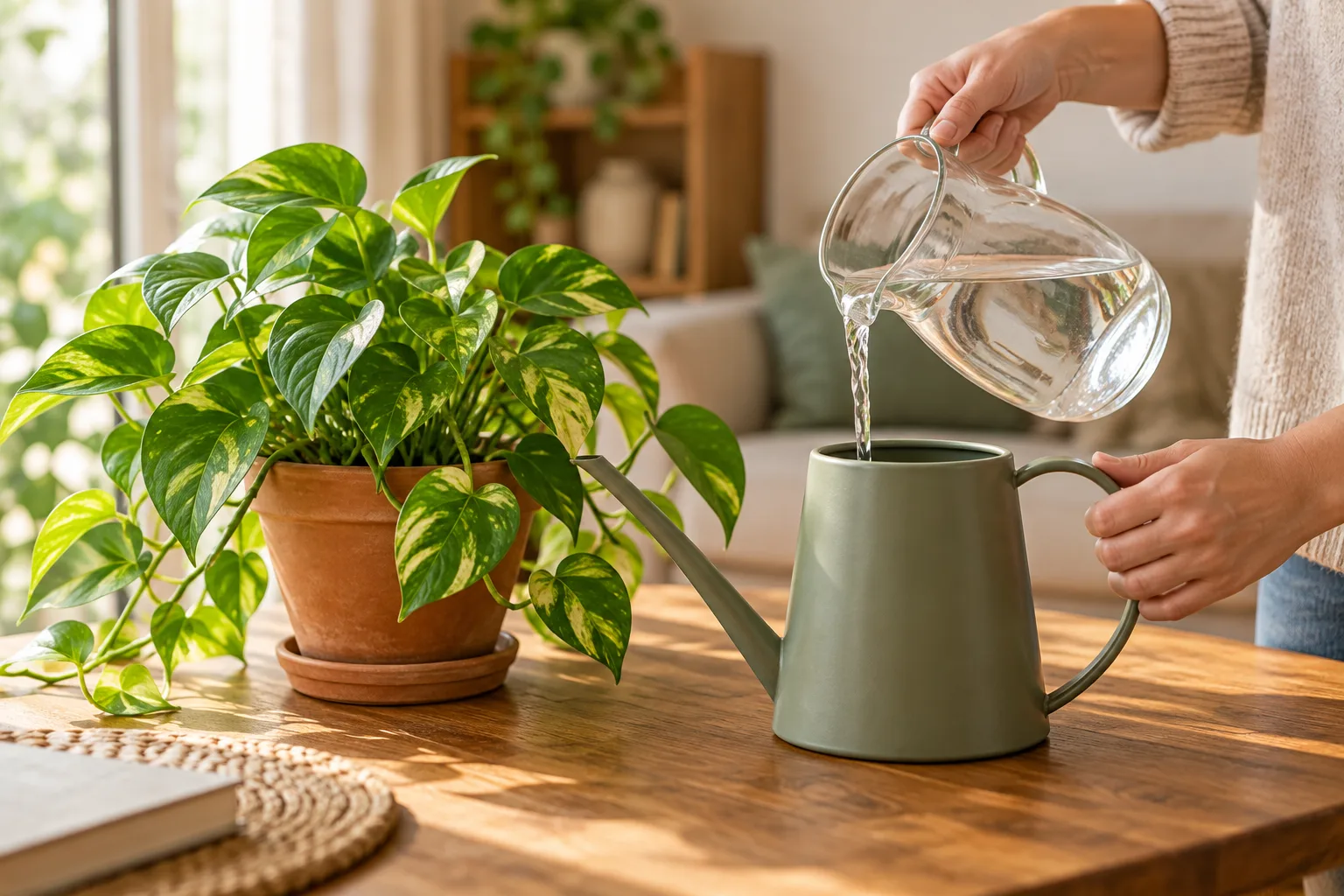
Most houseplants can use room-temperature tap water. Avoid water treated by a sodium-exchange softener; consider a suitable low-mineral source when a sensitive plant or local water conditions call for it.
Can I use tap water?
UC Agriculture and Natural Resources says tap water is usually fine for most houseplants. Use water near room temperature. For a private well or an unfamiliar supply, check local water information or arrange an appropriate test if salts or other constituents are uncertain.
Leaving water out can bring it closer to room temperature, but standing does not remove all dissolved salts or every disinfectant. It is not a universal water-treatment method.
Natural soft water and softened water are different
Hardness mainly reflects calcium and magnesium. An ion-exchange household softener can replace those minerals with sodium or potassium. Repeated use of sodium-softened water can contribute to salt buildup in potting mix, so choose water from before the softener when available.
Check the treatment equipment and which tap supplies untreated water. The word “soft” alone does not identify the source; mineral content of well water varies too.
What about rainwater and distilled water?
Rainwater collected in a clean, suitable system can be used for ornamental houseplants. Cover and maintain the container according to local guidance to limit contamination and mosquitoes. Water from a rain barrel is not drinking water.
Distilled or other suitable low-mineral water may help when a plant is sensitive, but most ordinary plants do not require purchased water. Filters remove different things; check the product rather than assuming every filter removes salts.
What if tips turn brown or a white crust appears?
Brown tips or a hard white crust on a pot or mix can be associated with salt buildup, but watering, fertilizer, humidity and other causes can look similar. Review the water source and care history before drawing a conclusion.
If the plant tolerates top watering, the pot drains freely and it is due for water, horticultural guidance may recommend flushing the mix with suitable low-salt water and draining it. For severe decline or poor drainage, inspect the roots and seek local advice.
Good water still needs good watering practice
Check the plant species and moisture below the surface before watering. When due, water slowly until excess drains through the holes, then empty the saucer or outer pot. Changing the water source is not a reason to water more often.
The cover illustrates water preparation; it is not a water-quality test or comparison.
Common questions
Must tap water sit overnight before watering?
Most ordinary houseplants usually tolerate tap water. Bringing it near room temperature can avoid a large temperature difference; further treatment depends on the supply and plant.
Can I use water from a home softener long term?
Sodium-exchange softened water can add salts to potting mix and is generally best avoided. Naturally soft water is not the same as water treated by a softener.
Can collected rainwater be drunk?
Rain-barrel water is not considered drinking water. Maintain the collection system and follow local guidance for suitable non-drinking uses.
Do brown leaf tips prove the water is bad?
No. Watering, fertilizer, humidity and root problems can produce similar symptoms.