Use the plant’s cold tolerance and local forecast to time the move. Check leaf undersides, stems and drainage holes; separate plants for observation when needed. Reassess light and watering indoors.
When to move: check night temperatures and species
Many tropical houseplants are cold-sensitive. Iowa State recommends bringing them inside before nighttime temperatures fall to about 50°F (10°C). Cold tolerance varies, so check the particular plant and forecast rather than treating that number as a universal safety line.
If the weather is already approaching the plant’s danger range, move it to a suitable indoor space first, then inspect and isolate it. Do not wait for frost or leave it in damaging cold for the sake of acclimation.
Inspect foliage, stems and pot before the move
Check new growth, leaf undersides and axils, stems and drainage holes for aphids, mealybugs, scale, webbing or other changes. Remove dead leaves, clean the outside of the pot and look for small animals around its base. Yellow leaves alone do not identify a pest.
Where the plant tolerates wet foliage, gently rinse outdoors and let it drain. Fuzzy leaves, rot-prone crowns and flowers may need another approach. If a pest is confirmed, treat according to the pest and local guidance.
Gradually reduce light when weather permits
If there is enough time before temperatures drop, move the plant gradually to more sheltered shade outdoors so it can adjust to lower light. Indoors, place it according to its species; lower light does not mean every plant belongs in a dark corner.
If cold or a severe storm arrives sooner, move the plant to safety first. Afterwards, watch leaves and new growth and adjust its position gradually instead of making repeated large moves.
Observe separately and reassess water and fertilizer
Keep newly returned plants apart from established houseplants for observation, especially checking leaf undersides and new shoots. Continue isolation and address any confirmed pest. Separation reduces opportunities for spread but does not guarantee plants are pest-free.
Indoor light, temperature and airflow differ from outdoors, so mix may dry more slowly. Do not continue the outdoor summer watering schedule automatically; check the mix and species. Avoid trying to force slower growth with concentrated fertilizer.
Do yellow or dropped leaves mean the move failed?
A few yellow or fallen leaves can follow a change in conditions, but pests, water or temperature may also be involved. Record the changes and check the mix and insects rather than changing everything at once. Investigate ongoing soft decay or increasing pests promptly.
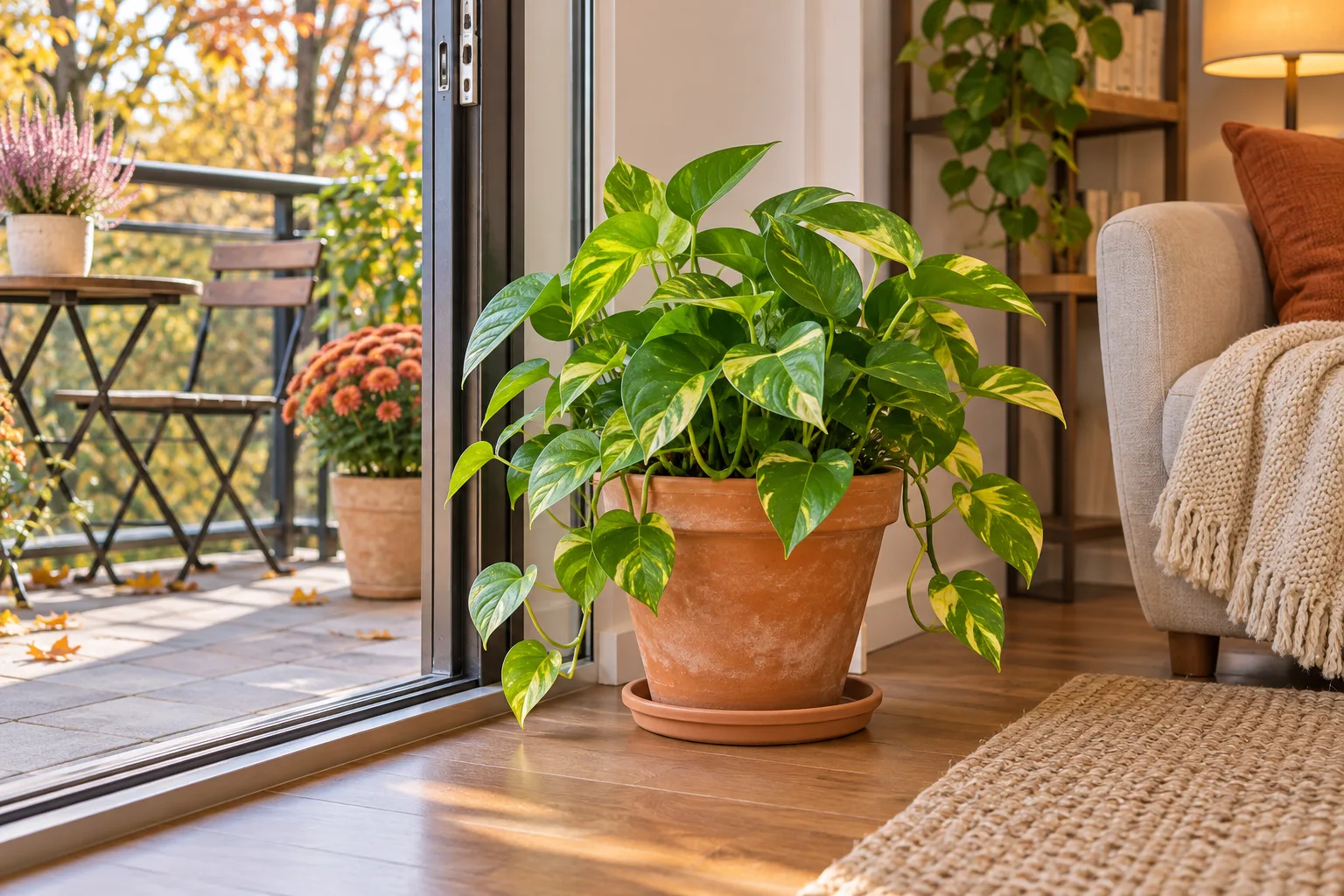
The cover illustrates a plant near a doorway; it is not a temperature measurement or proof of pest isolation.
Common questions
Should I wait until the day before frost?
No. Check the plant’s cold tolerance and nighttime forecast and plan ahead; if damaging cold is near, move it to safety first.
Must I water immediately after bringing it inside?
Not necessarily. Check moisture below the surface and the plant’s needs rather than keeping the outdoor schedule.
Do yellow leaves after the move prove pests?
No. Environmental change, water and temperature can also contribute. Inspect leaf undersides, mix and the timing of the change.
Must every plant spend time in shade before coming indoors?
Gradual adjustment can help, but use the species and weather to decide. If dangerous cold is imminent, move it to safety first.