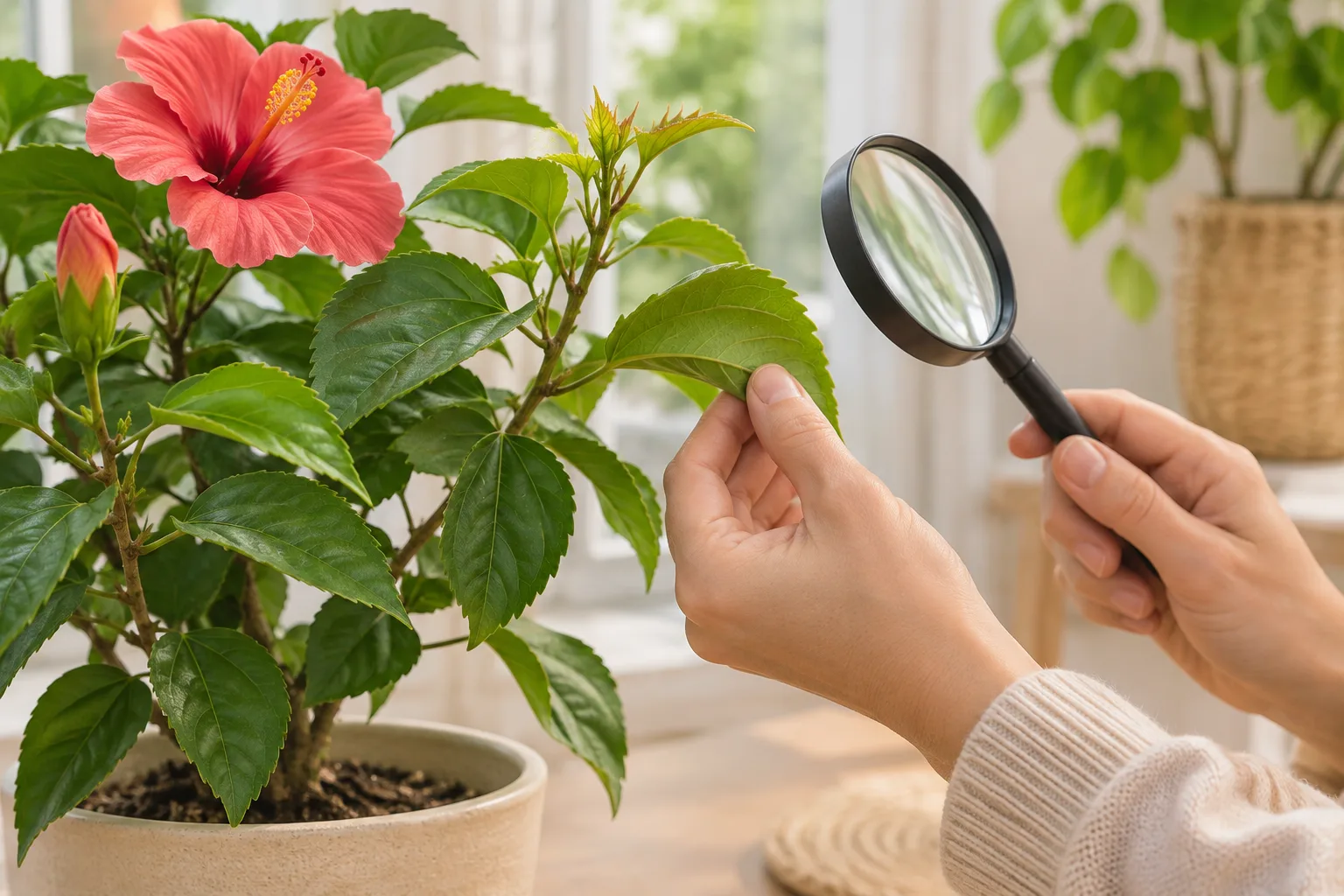
Isolate the plant and inspect tender growth and leaf undersides. Where the plant tolerates it, water can dislodge a small infestation. Recheck, and use a product only if local rules and its label cover the plant, aphids and treatment location.
Where do aphids gather and what do they look like?
Aphids are small, soft-bodied insects that may be green, brown, reddish or other colors. They often cluster on new growth, buds and leaf undersides, and may leave sticky honeydew or distorted leaves. Yellowing, curling and stickiness can have other causes too.
Compare similar problems: mealybugs often have white cottony wax, while adult whiteflies readily fly when disturbed. If the pest is uncertain, take a clear image of the insects and ask a local horticultural service.
Isolate and inspect nearby plants
Separate the affected pot from other plants so foliage does not touch. Check neighboring shoots, stems and leaf undersides. Wash your hands after handling and remove fallen infested material without carrying it to other pots.
A few insects do not automatically call for treating an entire room. Record the plant, where the insects appear and their approximate numbers so you can compare after treatment.
For a small infestation, rinse if the plant tolerates it
For plants whose foliage can be wetted, use a stream of water in a suitable location to dislodge insects from tender growth and both sides of leaves. Moderate the pressure to avoid breaking shoots, and protect flowers and crowns that should not remain wet. Drain the pot afterwards.
Fuzzy foliage, rot-prone crowns or open flowers may not tolerate rinsing. Carefully remove small, heavily affected sections where appropriate and seek advice. Clean and sanitize pruning tools according to suitable instructions.
When should a treatment product be considered?
If insects keep increasing or rinsing is insufficient, consult a local horticultural professional. Before using insecticidal soap, horticultural oil or another product, check local registration and the label for the pest, plant species and treatment location; follow dilution, timing and protection directions.
Contact products must reach the insects, which can be missed inside curled leaves. Do not improvise with laundry detergent, concentrated household soap or mixtures, or assume an outdoor pesticide is suitable indoors. Protect children, pets and pollinators.
Rechecking matters more than a single treatment
Continue inspecting new shoots and leaf undersides after treatment for live insects or fresh damage. For severe or recurring infestations, or a declining plant, keep it isolated and seek local advice; careful disposal may sometimes be needed to prevent spread.
The cover illustrates a leaf inspection and does not show real insects for diagnosis.
Common questions
Do sticky leaves always mean aphids?
No. Mealybugs, scale and other pests can also produce honeydew. Inspect the insects and their location.
Can I spray ordinary dish detergent?
Do not treat household cleaners as pesticides. If a treatment is needed, choose a locally permitted product and follow its label.
Will one rinse remove all aphids?
Not necessarily. Insects can remain on leaf undersides or inside curled growth, so recheck and repeat an appropriate treatment when needed.
Are flying aphids the same as fungus gnats?
No. Fungus gnats commonly gather around potting mix, while aphids often cluster on tender shoots and leaf undersides; some aphids have wings.