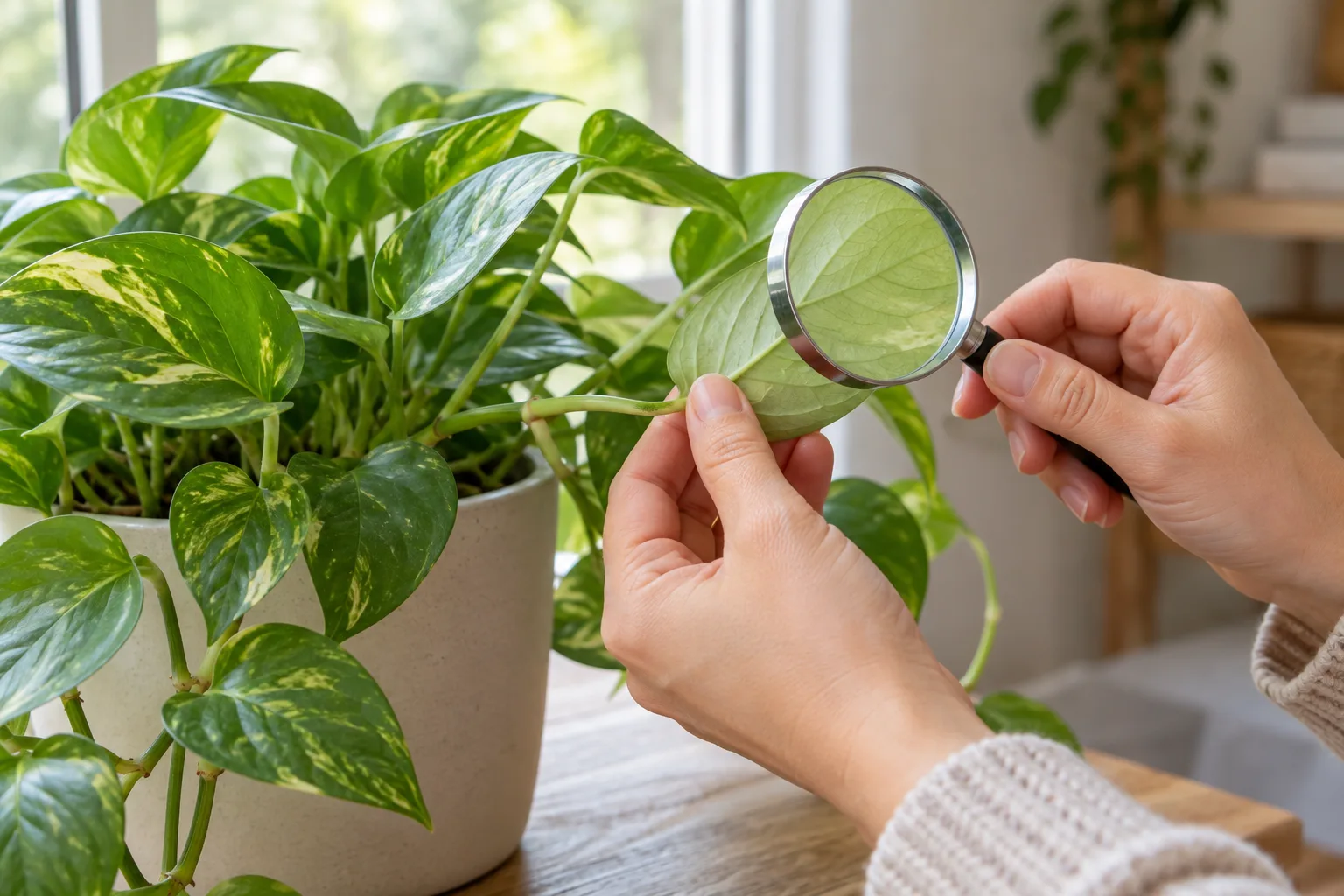
Separate a plant with suspected mealybugs and inspect its neighbors. Remove a few accessible insects gently and recheck hidden areas. Cottony material or stickiness alone is a clue, not a confirmed identification.
What might the white cotton be?
Mealybugs are small sap-feeding insects often covered in white wax. They can collect in leaf joints, on young stems, under leaves or around flowers, sometimes looking like cotton. Some move slowly.
Sticky honeydew and dark sooty growth can also appear, but other pests can leave similar clues. Cottony material, dust and powdery mildew cannot be identified by color alone; take a clear close-up and ask a local horticultural service if unsure.
Isolate and inspect sheltered spots
Separate the suspect plant from others so leaves do not touch. In good light, use a magnifier to inspect leaf undersides, petiole bases, stem joints, overlapping leaves and the outside of the pot.
Check nearby plants and the surface where the pot stood. Do not force apart tender leaves or damage roots while searching; keep photos and notes if the signs are unclear.
Gently remove a few accessible insects
Remove a few accessible insects gently with a slightly damp cotton swab or tweezers without scraping foliage. Discard the swab and clean tools afterward. A plant that tolerates rinsing may also be washed with a moderate stream, away from other plants.
University of California IPM also describes dabbing small numbers with a cotton swab using isopropyl alcohol at 70% or less. Alcohol can burn foliage: test a small area for one to two days, avoid broad leaf contact and skip it if the plant's tolerance is unknown. Keep it away from flames; do not spray a homemade alcohol-detergent mixture over the plant.
Why keep checking?
Mealybugs can hide in leaf sheaths, joints and new growth, so one cleaning may miss some. Recheck the original sites and new leaves during subsequent care and note any returning insects or wax.
For a heavy or recurring infestation, suspected root insects or a declining plant, ask a local horticultural professional. One cleaning or the absence of visible fluff does not prove the infestation is gone.
When to consider a horticultural treatment
If further treatment is needed, choose a locally permitted product labeled for mealybugs, the plant and the setting, and follow its instructions. Check restrictions carefully for flowering or edible plants and homes with pets.
Contact products must reach the insect; wax and sheltered locations make that difficult, and label-directed follow-up may be needed. Do not treat household detergent, vinegar or an unverified mixture as a universal pesticide.
Common questions
Is all white cotton on a leaf caused by mealybugs?
No. Look for small insects, their location and other clues; dust, disease and other pests can look similar.
Are mealybugs the same as scale insects?
Mealybugs are one group of scale insects and commonly have cottony wax. Other scales may look like fixed hard bumps; ask for identification if uncertain.
Will one alcohol treatment eliminate them?
It is not guaranteed. Insects can hide in crevices, and alcohol can injure foliage; patch-test and continue checking.
Does the picture show actual mealybugs?
No. It illustrates a leaf inspection and does not show a real pest or establish a diagnosis.