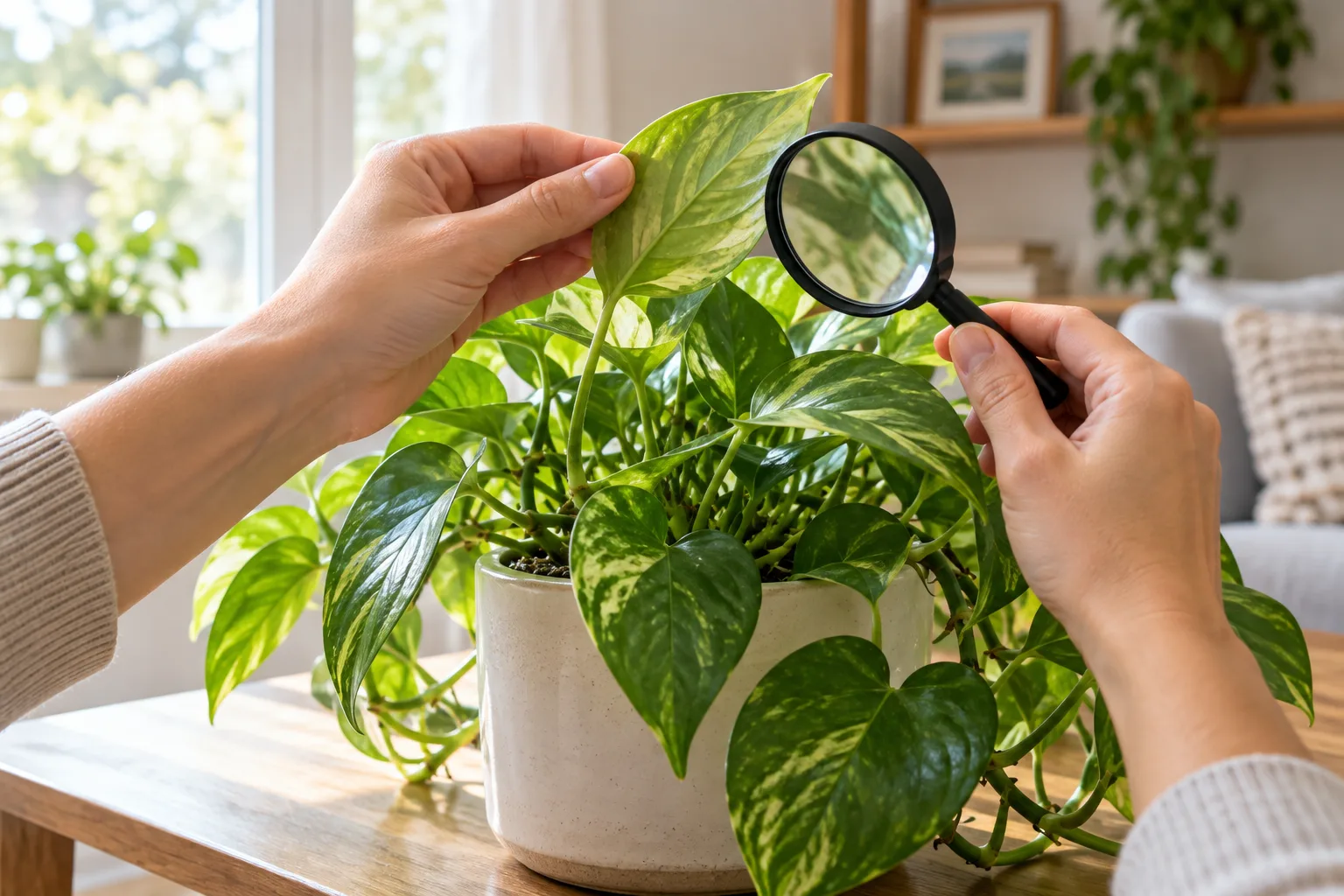
Inspect leaf undersides, veins, stalks and stems with a magnifier. If scale is confirmed, isolate the plant, gently remove small numbers where safe and keep checking. Stickiness or a single spot alone is not a diagnosis.
What can scale insects look like?
Many mature scale insects resemble small shell-like bumps attached to leaves or stems. Their color, shape and size vary by species. Adults may appear motionless, while newly hatched young can crawl to other parts of the plant.
Some soft scales produce sticky honeydew that may collect on leaves or nearby surfaces; not every scale produces it. Natural markings, disease spots and other pests can look similar, so neither one bump nor stickiness alone confirms scale.
Look under leaves and around stems
Move the plant into good light and use a magnifying glass to inspect leaf undersides, veins, stalks, young stems and sheltered crevices. If you find a suspicious bump, observe it gently rather than scraping hard enough to damage the leaf.
If you are unsure, take a clear close-up, note the plant's name and consult a local horticultural service. Inspect nearby plants too. Cottony material, webbing or flying insects may call for a different investigation.
Isolate the plant and remove small numbers gently
If infestation is confirmed or strongly suspected, separate the plant so its leaves do not touch others. Protect the work surface and use a cotton swab or soft small brush to gently remove accessible insects; clean the tools and surface afterward.
On some armored scales the cover can separate from the insect, so a detached shell does not prove the pest is gone. Do not scrape fragile tissue or remove most of the plant's healthy growth at once.
Why follow-up checks matter
Scale insects can hide under leaf sheaths and in crevices, and young insects may continue to appear. Recheck the affected areas and new growth for fresh bumps or honeydew. Existing leaf damage may not reverse.
For a heavy or recurring infestation, or if the plant continues to weaken, consult a local horticultural professional about the next step. One cleaning is not proof that every insect has been eliminated.
Read the label before using a treatment
Some horticultural oils and insecticidal soaps are used against scale, but suitability for indoor use, the plant and the pest depends on local rules and the specific product label. Follow its instructions for application and safety; edible plants require particular care and explicit label approval.
Do not mix household detergent, alcohol or other household ingredients into an improvised whole-plant spray. Some plants are sensitive to treatment; ask a local horticultural service if the appropriate approach is unclear.
Common questions
Do sticky leaves always mean scale insects?
No. Some scale insects produce honeydew, but other sap-feeding pests can also leave sticky residue. Inspect the insects and their locations before deciding.
Why does scale return after I remove it?
Insects or young crawlers may have been hidden in sheaths or crevices, or may have spread again. Keep checking affected and nearby plants and seek advice if the problem persists.
Can I spray dish soap on the plant?
Avoid improvised household-detergent sprays. If a product is needed, choose one permitted locally and labeled for the plant, pest and intended setting.
Does the illustration show an actual scale infestation?
No. It illustrates the act of checking a leaf and is not a diagnostic photograph. Use the real insects, leaf undersides and stems to assess your plant.