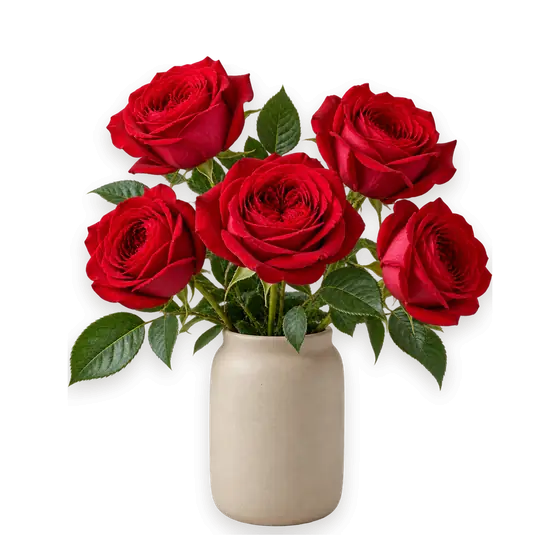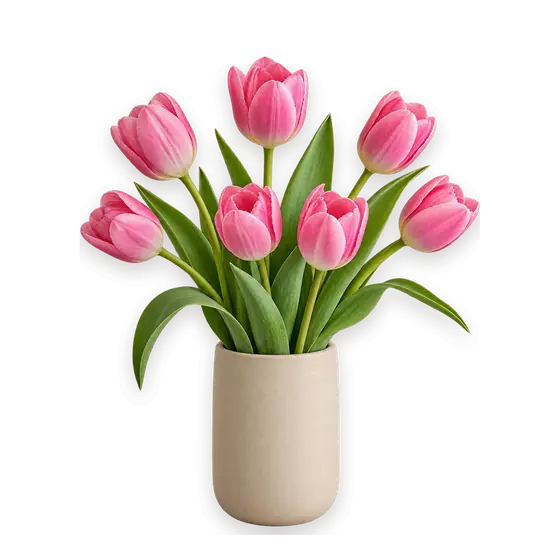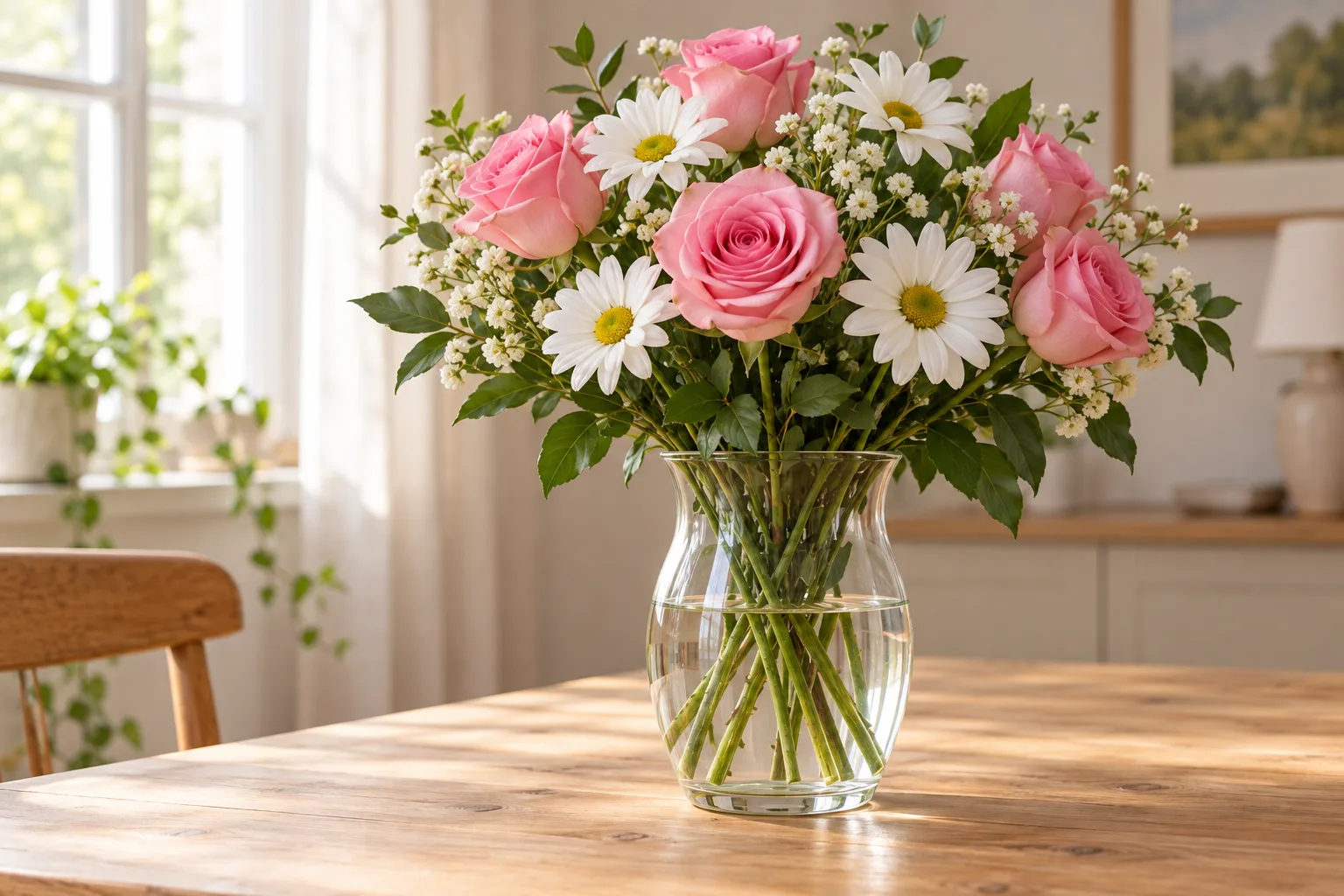
Wash the vase, remove foliage that would sit below the water, and recut the stems with a clean, sharp tool before placing them in fresh water. Check the water daily and change it promptly if it becomes cloudy or smells.
Start with a clean vase and fresh water
These steps are for cut flowers displayed in a vase, not rooted plants. Wash the vase with warm soapy water and rinse it thoroughly. Add clean room-temperature water deep enough to cover the cut ends of the stems.
If the bouquet came with flower food, mix it according to the packet. Without it, clean water is a good option; there is no need to add homemade mixtures of sugar, vinegar or aspirin.
Remove submerged leaves and recut the stems
Hold each stem beside the vase to estimate the water line. Remove the leaves that would be under water, along with damaged foliage; healthy leaves above the water can stay. Submerged leaves can decay and dirty the water.
Using clean, sharp floral snips or pruners, remove about 1–2 cm (roughly ½–1 inch) from the bottom of each stem, then put it into water promptly. Choose a tool that makes a clean cut without crushing the stem. Rose thorns do not need to be stripped to extend vase life; protect your hands when handling them.
Check the water daily and replace it regularly
Check that the stem ends remain submerged and top up when necessary. Replace the water every two or three days as a practical routine, or sooner if it becomes cloudy or develops an odor.
Wash and rinse the vase at each water change, recut a little from the stem ends, and return the flowers to fresh water. If using flower food, prepare the new water according to its label rather than keeping old solution indefinitely.
Choose a cool spot away from heat and ripening fruit
Display the bouquet in a cool, bright place away from strong direct sun, radiators, heating vents and other heat sources. Ripening fruit releases ethylene, which can accelerate ageing in some flowers, so keep the vase away from the fruit bowl.
Remove decaying blooms and fallen leaves and keep the water clean. Different flowers have different vase lives and care needs, so no routine can promise the same number of days for every bouquet.
What to check if flowers droop early
Look at the water level, clarity and location first: are the stems still submerged, does the water smell, and is the bouquet close to a heat source? Wash the vase, provide fresh water and recut the stems before observing the flowers again in a suitable spot.
Flowers may also be reaching the end of their natural vase life, so changing the water cannot guarantee recovery. Hollow stems, bulb flowers and other special materials may need different care; follow the florist's or plant-specific advice.
Common questions
Should I change flower water every day?
Check the water level daily. A change every two or three days is a practical routine; replace it sooner if it is cloudy or smells, and wash the vase at the same time.
What if I do not have flower food?
Use clean water. If you do use a commercial preservative, follow the packet; do not mix household sugar, vinegar, bleach or medicine into the vase at random.
Should I remove all the leaves from a bouquet?
No. Remove foliage that would sit under water and any damaged leaves. Healthy foliage above the water line can remain.
Can cut flowers sit next to fruit?
It is better to separate them. Ethylene released by ripening fruit can age some flowers faster; also avoid direct sun and heating vents.