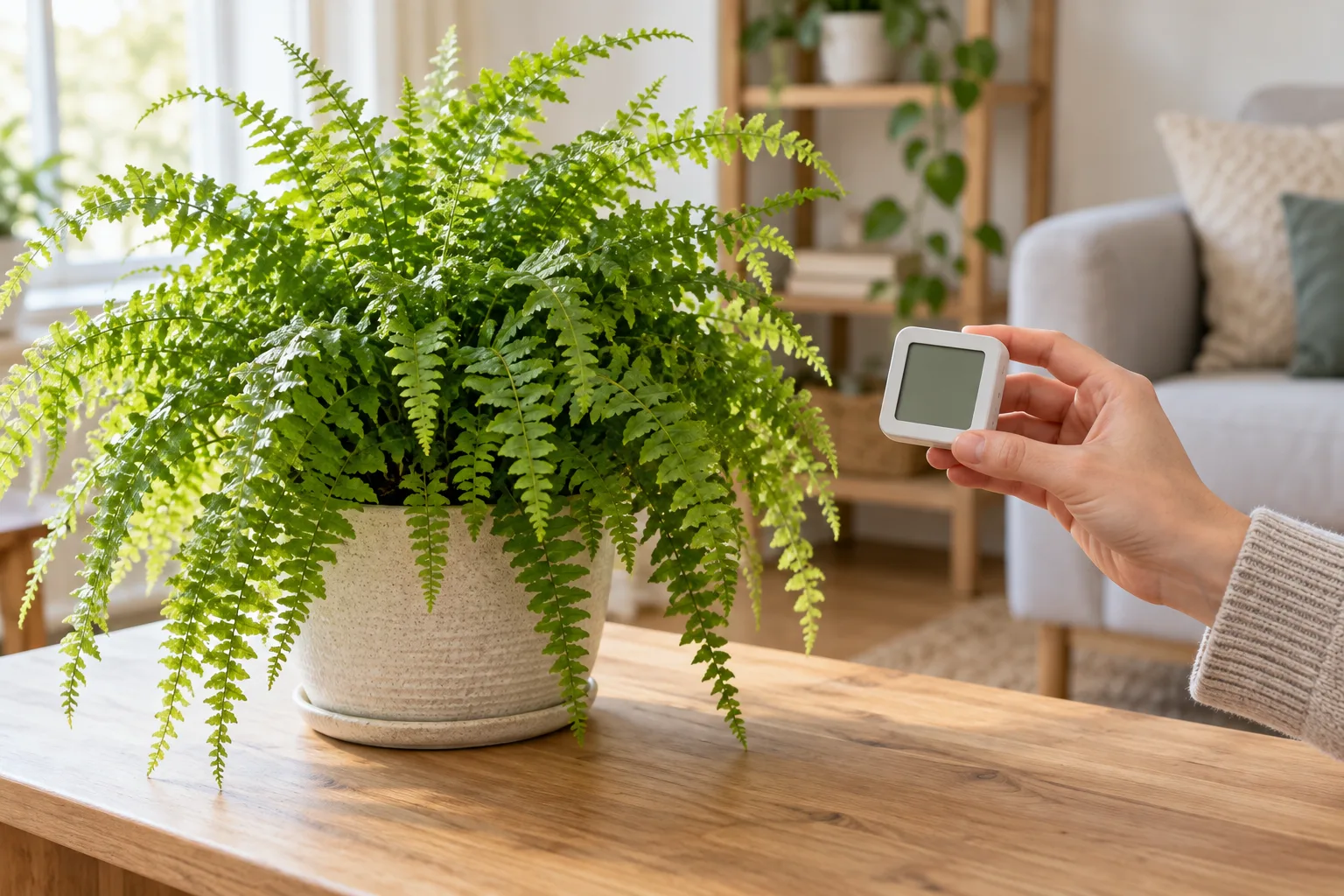
A hygrometer helps you observe changing air humidity; misting has a brief effect. If you add humidity, keep equipment clean and avoid condensation or leaving the pot sitting in water.
Start with the plant, not a single brown leaf tip
Some ferns and other tropical foliage plants prefer more humid air, while cacti and many succulents have different needs. Check the particular plant and consider its light, temperature and season.
Brown tips can be associated with dry air, but watering, salts, root condition or other changes may also play a part. One symptom alone cannot establish the cause; check the mix and the rest of the plant too.
Use a hygrometer near the plant
Place a hygrometer near leaf level, away from a humidifier outlet, heater or cold glass. Check at different times and notice how heating, ventilation or weather changes the reading.
There is no single number for every plant. The meter in the cover illustration has a blank screen and does not depict a real measurement. Consider the room as well as the plant before adding moisture.
Consider grouping, a pebble tray or a humidifier
Place healthy plants with similar needs reasonably close together while leaving room for airflow. Keep newly acquired plants or those with suspected pests apart for observation before grouping them.
A shallow tray of pebbles and water is another option: keep the pot above the waterline. Effects close to the tray depend on the room and do not guarantee a particular reading throughout it. Clean the tray and refresh its water regularly.
Use and maintain a humidifier carefully
If you use a humidifier, follow the manufacturer's water and cleaning instructions and do not leave water standing for long periods. The U.S. EPA recommends changing water daily in portable units and cleaning them regularly. Keep the outlet away from foliage, walls and electronics.
The EPA recommends keeping indoor relative humidity at or below 50%. If windows, walls or furnishings become damp or show condensation, lower the output or stop the device and check ventilation. Do not keep the room wet for the sake of a plant.
Can misting replace humidification?
Water on a leaf evaporates quickly, so misting generally does not raise air humidity for long. Avoid routinely wetting fuzzy foliage and other leaves that should remain dry.
Increasing air humidity does not replace checking whether the potting mix needs water. Continue observing the plant, its mix and the surrounding room after changing your setup.
Common questions
Does daily misting keep humidity high?
Its effect is usually brief. Measure the air first, then consider grouping, a tray or a humidifier as appropriate.
Do brown tips always mean dry air?
No. Watering, fertilizer salts, root condition and other environmental factors can also contribute.
Should the pot sit in the water in a pebble tray?
For ordinary soil-grown plants, keep the pot above the water rather than immersed, and clean the tray regularly.
Do all houseplants need high humidity?
No. Needs differ by species; cacti and many succulents differ from moisture-loving ferns.